

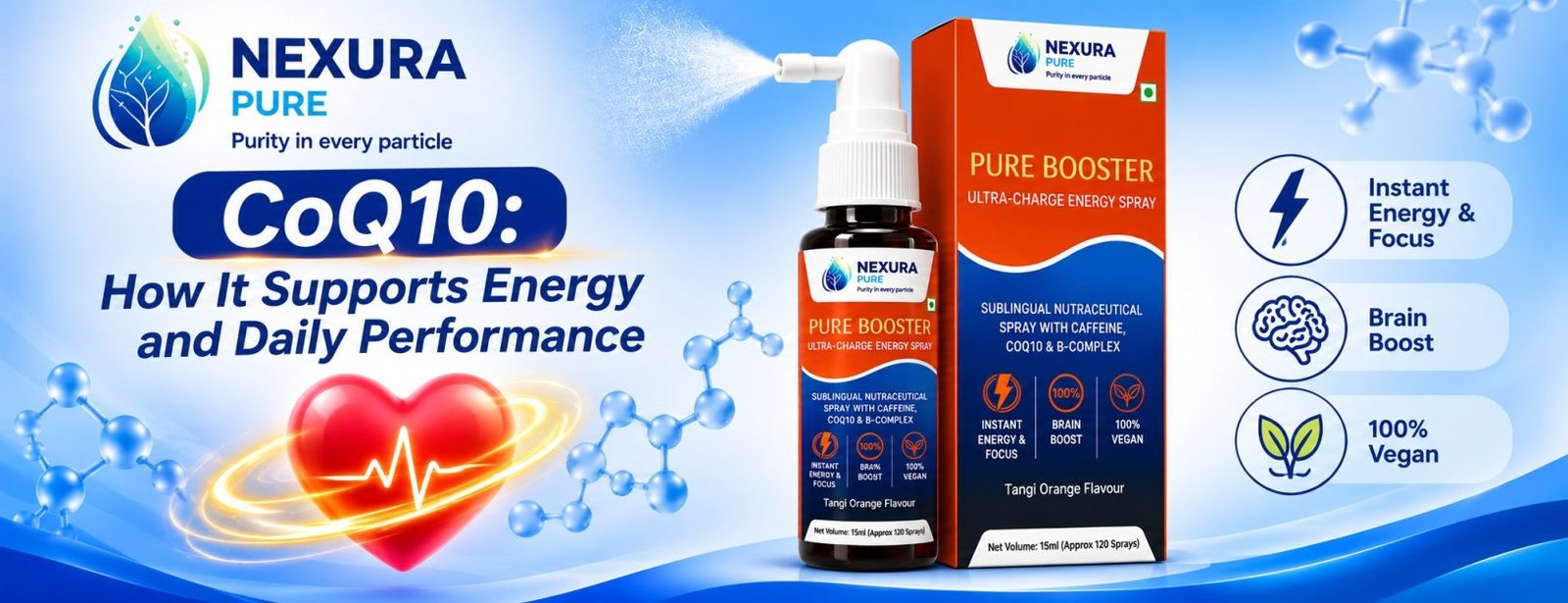
CoQ10: Benefits, Uses, Food Sources and What You Should Know
Explore the role of CoQ10 in cellular energy production, antioxidant protection and everyday nutritional wellness.
Energy is essential for almost everything the human body does, from everyday movement to the normal functioning of organs. Behind these activities are millions of tiny processes taking place inside our cells. One nutrient-like compound involved in these processes is CoQ10, also known as Coenzyme Q10.
CoQ10 has become a popular topic in nutrition and wellness because of its connection with cellular energy production and its antioxidant properties. It is naturally present in the body and can also be obtained in small amounts from certain foods. Additionally, CoQ10 is available in supplement form for people interested in exploring their nutritional options.
But what exactly does CoQ10 do? Which foods contain it? What is the difference between ubiquinone and ubiquinol? This guide explains the important facts in simple language and helps you understand what to consider before choosing a CoQ10 supplement.
In This Article
- What Is CoQ10?
- How Does CoQ10 Work in the Body?
- Important Roles and Potential Benefits of CoQ10
- Ubiquinone vs Ubiquinol
- Natural Food Sources of CoQ10
- What Can Influence CoQ10 Levels?
- Understanding CoQ10 Supplements
- How to Choose a CoQ10 Product
- Everyday Habits for Better Cellular Wellness
- Safety and Possible Side Effects
- Explore Pure Booster by Nexura Pure
- Frequently Asked Questions
- Final Thoughts
1. What Is CoQ10?
CoQ10, short for Coenzyme Q10, is a naturally occurring compound found in almost every cell of the human body. It is especially important in organs that require considerable energy, such as the heart, liver and kidneys.
CoQ10 is sometimes described as a vitamin-like substance, but it is not technically a vitamin because the body can produce it on its own. It is present in the mitochondria, commonly known as the energy-producing structures of cells.
One of its major roles is helping cells produce adenosine triphosphate (ATP). ATP is the primary energy-carrying molecule used by cells to perform their normal functions.
2. How Does CoQ10 Work in the Body?
To understand CoQ10, it helps to understand how cells generate energy. The body converts nutrients from food into usable energy through a series of chemical reactions. Many of these processes take place inside mitochondria.
CoQ10 participates in the mitochondrial electron transport chain, a process that helps generate ATP. Without the normal functioning of this system, cells would have difficulty meeting their energy requirements.
Its Role in Energy Production
CoQ10 helps transfer electrons during the process of cellular energy production. This makes it an important component of the system that converts energy from food into a form cells can use.
Its Antioxidant Function
Normal cellular activity can produce free radicals. CoQ10 also acts as an antioxidant and helps protect cells against oxidative damage. The body maintains antioxidant systems to manage this natural process.
Why Different Organs Need It
Organs with high energy demands rely on efficient cellular energy production. This is one reason CoQ10 is present throughout the body, including in tissues such as the heart, muscles and kidneys.
3. Important Roles and Potential Benefits of CoQ10
CoQ10 is studied for several aspects of human health. Its established biological roles are important to understand, while research into possible health benefits continues to develop.
Participates in the process that helps cells produce ATP.
Helps protect cells against oxidative damage.
Has been studied in relation to cardiovascular health and certain heart conditions.
Its role in energy production makes it relevant to research on muscle tissues.
Supporting Normal Cellular Energy
CoQ10 is involved in ATP production, which provides energy for normal cellular activities. This is its most recognised biological function.
Antioxidant Protection
CoQ10 can help limit oxidative damage by participating in the body's antioxidant defence system. Oxidative stress is associated with several biological processes and is an area of ongoing scientific research.
Research into Cardiovascular Health
CoQ10 has been investigated in people with certain cardiovascular conditions. Some studies suggest possible benefits in specific clinical settings, but the evidence varies. It should not replace prescribed treatment or medical advice.
Exercise and Physical Performance Research
Because CoQ10 participates in cellular energy production, researchers have explored its relationship with exercise performance and fatigue. Findings are mixed, and supplementation does not guarantee improved stamina or athletic performance.
Healthy Ageing Research
CoQ10 levels and production can change with age. Scientists continue to study its role in cellular function and age-related changes, but supplements should not be presented as a proven anti-ageing solution.
4. Ubiquinone vs Ubiquinol: What Is the Difference?
CoQ10 exists in two main forms: ubiquinone and ubiquinol. Both are part of the body's natural CoQ10 system and can be converted from one form to the other.
Ubiquinone
Ubiquinone is the oxidised form of CoQ10. It participates in the electron transport chain and is commonly used in dietary supplements.
Ubiquinol
Ubiquinol is the reduced form of CoQ10. It is involved in the body's antioxidant system and can be converted back into ubiquinone as part of normal biological activity.
Both forms are relevant to the body's functioning. Supplement choice can depend on formulation, quality, individual needs and professional guidance. One form should not automatically be considered the best option for everyone.
5. Natural Food Sources of CoQ10
The body produces CoQ10 naturally, but certain foods also contain small amounts. Including a variety of nutrient-rich foods in your meals can contribute to a balanced diet.
Food Sources to Know
- Organ meats: Heart and liver are among the richer dietary sources of CoQ10.
- Fatty fish: Sardines, salmon and mackerel contain CoQ10.
- Meat: Beef and pork provide smaller amounts.
- Nuts and seeds: Peanuts, pistachios and sesame seeds contain some CoQ10.
- Vegetables: Spinach, broccoli and cauliflower provide smaller quantities.
- Legumes: Some beans and lentils also contain CoQ10.
Dietary amounts vary depending on the food, variety, preparation and serving size. Food sources are part of a balanced eating pattern, but they do not necessarily provide the same quantities as a concentrated supplement.
6. What Can Influence CoQ10 Levels?
CoQ10 is naturally produced by the body, but its levels can vary between individuals and tissues. Several factors are being studied for their relationship with CoQ10 status.
Age
CoQ10 levels may change with age, although the pattern can differ across tissues and individuals.
Health Conditions
Certain health conditions have been associated with changes in CoQ10 levels. These relationships are complex and should be evaluated by healthcare professionals.
Medication Use
Some cholesterol-lowering medicines, particularly statins, may affect CoQ10 levels. However, anyone taking prescribed medication should never change or stop treatment because of supplement-related information without consulting their doctor.
Diet and Overall Nutrition
A balanced diet provides several nutrients involved in normal metabolic processes. While food alone does not determine CoQ10 levels, overall nutrition remains important for general health.
7. Understanding CoQ10 Supplements
CoQ10 supplements are available in several forms, including capsules, softgels, tablets and certain liquid formulations. They are designed to provide CoQ10 in a concentrated serving.
People may explore CoQ10 supplements for different reasons, including interest in cellular energy production, antioxidant support or specific health concerns discussed with a healthcare professional.
Common Supplement Formats
- Softgels: Often contain CoQ10 in an oil-based formulation.
- Capsules: Provide a measured serving in a familiar supplement format.
- Tablets: Another commonly available format, depending on the formulation.
- Liquid products: Available in selected formulations and may offer an alternative to solid formats.
CoQ10 is fat-soluble, so some formulations are designed with oils or other ingredients to support its delivery. Product quality and formulation can influence how the ingredient is presented.
8. How to Choose a CoQ10 Product
Choosing a supplement should involve more than comparing brand names or looking at promotional claims. Here are some useful points to consider.
Check the CoQ10 Amount
Look at the quantity of CoQ10 provided per serving. Different products can contain different amounts, and more is not automatically better.
Review the Form
Check whether the product contains ubiquinone or ubiquinol. Understand the formulation before making a decision.
Read the Complete Ingredient List
Check all active and inactive ingredients. This is particularly important if you have food allergies, sensitivities or dietary restrictions.
Look for Clear Manufacturer Details
Choose products with transparent labelling, manufacturer information, batch details, expiry dates and storage instructions.
Consider Your Personal Needs
CoQ10 supplements may not be suitable for everyone. Discuss their use with a healthcare professional if you take medication or have an existing health condition.
9. Everyday Habits for Better Cellular Wellness
CoQ10 is only one part of the body's complex energy-producing system. Everyday lifestyle choices also contribute to overall well-being and normal metabolic function.
Include a variety of vegetables, fruits, legumes, nuts and other nutrient-rich foods.
Build a practical exercise routine that includes activities suited to your fitness level.
Maintain consistent sleep and waking times to support everyday recovery.
Drink enough water throughout the day according to your needs and activity.
It is also helpful to manage daily stress, avoid smoking and maintain regular health check-ups. No single nutrient or supplement can replace these broader lifestyle habits.
10. Safety and Possible Side Effects
CoQ10 supplements are generally well tolerated by many people, but side effects can occur. Some reported effects include:
- Digestive discomfort
- Nausea
- Diarrhoea
- Reduced appetite
- Headache
- Difficulty sleeping in some individuals
CoQ10 may interact with certain medicines, including warfarin and some treatments for blood pressure or blood sugar. People taking regular medication should consult a healthcare professional before starting a supplement.
11. Explore Pure Booster by Nexura Pure
For people exploring wellness products that include ingredients associated with everyday nutritional support, Nexura Pure offers Pure Booster.
Pure Booster is a sublingual spray featuring a combination of ingredients including CoQ10, glutathione, Vitamin C, zinc and biotin. This multi-ingredient formulation brings together components commonly discussed in nutrition and wellness.
If you are comparing different wellness product formats, you can review the product page to learn more about its ingredient information, packaging and usage directions.
Nexura Pure Collection
Pure Booster – Sublingual Wellness Spray
Explore the Pure Booster formulation and learn more about its combination of CoQ10 and other ingredients.
Explore Pure BoosterYou can also visit Nexura Pure's sublingual spray collection to explore more products from the brand.
12. Frequently Asked Questions
1. What is CoQ10 used for?
CoQ10 is naturally present in the body and plays a role in cellular energy production and antioxidant activity. Supplements are also studied for certain health-related applications.
2. Is CoQ10 naturally produced by the body?
Yes. The body produces CoQ10 naturally, and it is present in many tissues and organs. Small amounts are also obtained through food.
3. Which foods contain CoQ10?
Some sources include organ meats, fatty fish, beef, peanuts, pistachios, spinach, broccoli and cauliflower. The amount varies between foods.
4. What is the difference between ubiquinone and ubiquinol?
Ubiquinone is the oxidised form of CoQ10, while ubiquinol is its reduced form. Both participate in normal biological processes.
5. Does CoQ10 help with energy production?
Yes. CoQ10 participates in the mitochondrial process that helps cells produce ATP, the body's main energy-carrying molecule. This does not mean that supplements guarantee increased energy or stamina.
6. Can CoQ10 be taken with other supplements?
It depends on the ingredients and individual circumstances. Review the complete formulation and consult a healthcare professional, particularly if you take medication.
7. Are there side effects of CoQ10 supplements?
Some people may experience digestive discomfort, nausea, diarrhoea, headache or sleep-related changes. Consult a healthcare professional if you experience unwanted effects.
8. What should I check before buying a CoQ10 supplement?
Review the CoQ10 quantity, form, full ingredient list, manufacturer details, expiry date and usage instructions.
9. Does Pure Booster contain CoQ10?
Yes. CoQ10 is one of the ingredients listed for Nexura Pure Pure Booster. Visit the Pure Booster product page for product information.
13. Final Thoughts
CoQ10 is an important naturally occurring compound involved in cellular energy production and antioxidant activity. Understanding its biological role, dietary sources and supplement formats can help consumers make more informed nutritional choices.
Although CoQ10 is an interesting area of health research, supplements should not be viewed as a guaranteed solution for fatigue, heart conditions or other medical concerns. A balanced diet, regular activity, quality sleep and professional guidance remain important.
If you are interested in exploring a multi-ingredient sublingual wellness product, learn more about Nexura Pure Pure Booster and review its formulation before making a choice.